+86-13363216781

Views: 26 Author: Site Editor Publish Time: 2025-11-11 Origin: Site


Brake shoes are core components of a vehicle's braking system, and their quality directly impacts driving safety. When selecting, consider multiple factors, including material, compatibility, and brand. This article will offer a detailed guide to help you choose suitable high-performance brake shoes.
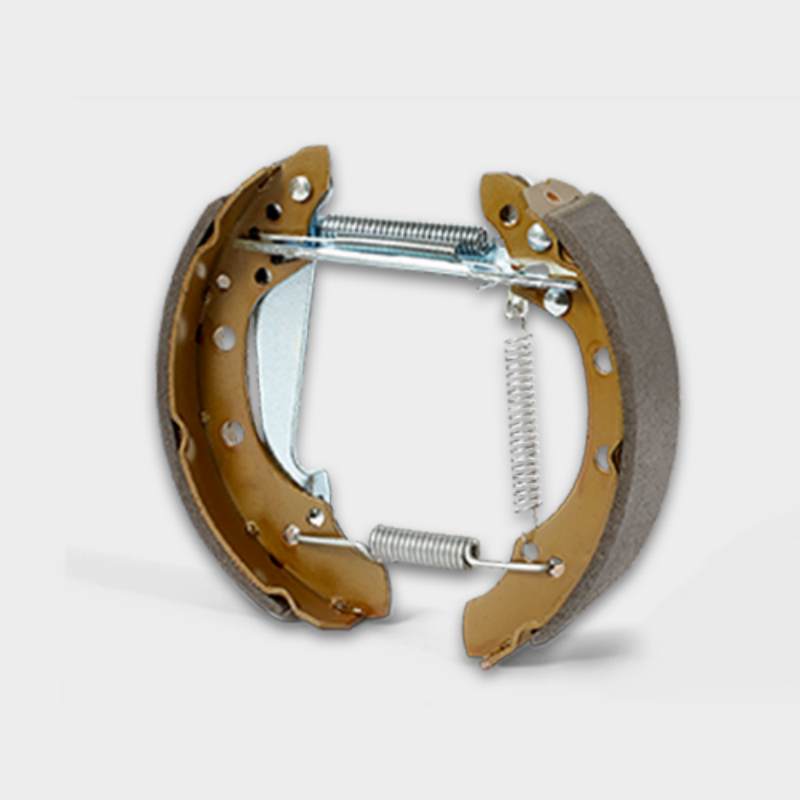
The core of brake shoe performance lies in the material itself, and selection should be tailored to the vehicle's usage scenario:
Semi-metallic materials: Containing metal fibers such as steel and copper, they offer strong heat resistance and stable braking force, making them suitable for frequent braking situations like city commuting and taxis. However, their high metal content can cause relatively rapid wear on the brake disc, and slight squeaking may occur in low-temperature environments.
Low-metal materials: Combining a low metal content with organic materials (such as resin and rubber), they offer a balance between braking force and quietness, exhibiting slow wear and low dust production, making them ideal for everyday use in family cars.
Ceramic materials: Composed of a composite of ceramic fibers and metal powders, they offer excellent heat resistance (withstanding high temperatures without degradation), minimal wear on the brake disc, low dust production, and a light color (thus minimizing wheel staining). They also offer exceptional quietness. Suitable for high-performance vehicles and those who demand comfort, but they are relatively expensive.
Organic materials: Primarily composed of resin, rubber, and fiber, they have a low coefficient of friction and poor heat resistance, but offer excellent quietness and wear resistance, making them suitable for low-speed, light-loaded vehicles (such as some minivans).
Model Matching: Brake shoes must fully match the vehicle's brake disc size and brake system type (drum/disc). It is recommended to refer to the vehicle's owner's manual for the manufacturer's specifications or select products clearly marked "For Specific Model Year." Dimension mismatches may result in brake binding, insufficient braking force, or abnormal wear.
Brake Type Distinction: Drum brake shoes and disc brake pads have significantly different structures and should not be used interchangeably. Be sure to clearly identify your vehicle's braking system when purchasing.
Brand Selection: Products from reputable brands (such as Bosch, Ferodo, TRW, and ATE) undergo rigorous bench and road testing, boasting a scientific material mix and consistent craftsmanship, ensuring a stable coefficient of friction (typically between 0.35 and 0.45, meeting safety standards). Furthermore, these brands have comprehensive after-sales service systems, ensuring quality.
Channel Control: Avoid purchasing low-priced, unbranded products (which may use recycled materials or materials with excessive impurities, resulting in large fluctuations in friction coefficient and prone to failure at high temperatures). It is recommended to purchase through the brand's official website, authorized dealers, reputable 4S dealerships, or official flagship stores on major e-commerce platforms. Keep your receipt of purchase for after-sales service.
Appearance and Craftsmanship: High-quality brake shoes have a smooth friction lining surface, free of cracks, bubbles, chips, or burrs on the edges. The friction lining is firmly bonded to the shoe, showing no signs of loosening or debonding when manually pried. The welds (if any) are uniform and full.
Certification Markings: Check for international or industry-recognizable certifications, such as Europe's ECE R90 and the United States' SAE J661. These markings indicate that the product has passed multiple tests for braking performance, durability, and environmental performance.
Packaging Information: Follow standard product packaging standards, clearly labeling the brand logo, model, production date, compatible vehicle model, friction coefficient range, and other information without blurring, alterations, or omissions.
For daily household use: Prioritize low noise, low dust, and long life, preferably low-metal or ceramic materials.
For heavy-duty/mountain driving: Frequent high-intensity braking is required, so choose semi-metallic materials with strong heat resistance and stable braking force.
For modified/performance vehicles: Competition-grade materials (such as high-metal content or ceramic composites) are required to ensure thermal stability under extreme operating conditions (such as continuous heavy braking).
For low-temperature northern regions: Avoid pure metal materials. Prefer low-metal or ceramic materials to reduce low-temperature noise and braking force fluctuations.
In addition to material and appearance, key performance parameters deserve attention. Check the product manual for the fade resistance rate (should be below 20% after continuous high-temperature braking tests) and wear rate (the amount of wear per 1000 kilometers should be stable within the brand's specified range). For commercial vehicles or heavy-duty trucks, focus on the compression recovery rate of the brake shoe, which reflects its ability to return to its original state after repeated braking, ensuring no drag or stuck issues.
High-quality brake shoe products usually come with clear warranty policies, such as a 12-24 month warranty period or coverage for a certain number of kilometers (e.g., 30,000-50,000 km). Confirm whether the warranty covers quality issues like abnormal wear, delamination, or braking failure. Reputable brands also provide technical support, such as guidance on break-in procedures after replacement, to ensure optimal performance of the new brake shoes.
In short, the core principle of brake shoe selection is "safe fit": Based on the vehicle's original specifications, select materials based on the vehicle's usage scenario, purchase branded products through reputable channels, and pay attention to appearance, certification, performance parameters, and after-sales details. Never overlook quality for low price; after all, the reliability of the braking system is directly related to life safety.Our company has its own parts manufacturing plant, providing safe and reliable automotive brake parts, which can meet your needs for different brake parts in different scenarios. If you are looking for a suitable brake part, please contact us by+86-13363216781 or jessicabrakes12@gmail.com.Our website address is https://www.evfriction.com.


